I spent an entire weekend rebuilding a decorated carrot cake after the cream cheese frosting slid clean off during transport to a bridal shower — in July, in Texas, with no cooler in the car. The client was gracious, but that failure cost me six hours and every ingredient twice over.
A decorated carrot cake commands attention before anyone takes a bite. Get the decorating right and the flavor becomes the second thing people notice, not the first.
Stop guessing with your decorating — every technique here is tested, repeatable, and built for real kitchens with real time pressure.
What Makes a Decorated Carrot Cake Visually Different From Other Cakes:
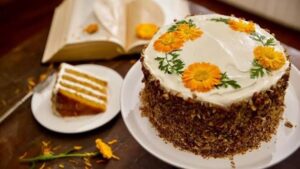
A decorated carrot cake has an inherent earthiness that other cakes don’t. The warm brown tones of the crumb, the spiced aroma, and the rustic character of the bake all push decoration in a specific aesthetic direction.
- Neutral and warm tones suit it better than bright, saturated palettes
- Organic textures like pressed nuts and fresh herbs feel intentional, not lazy
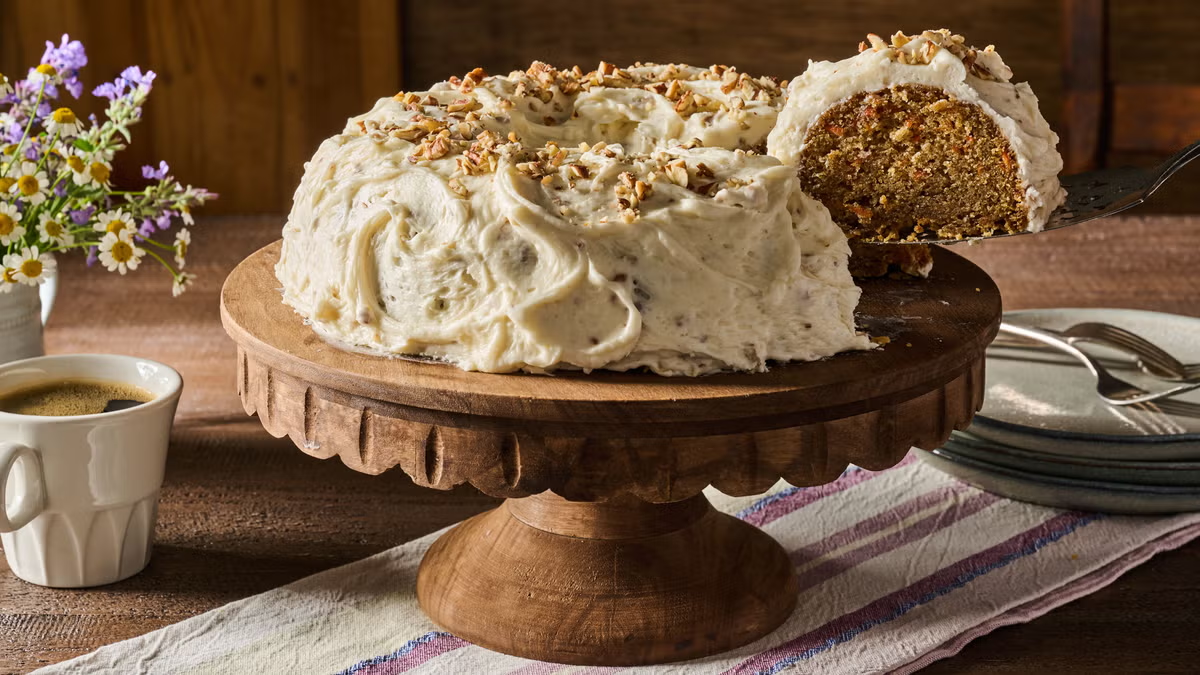
- Cream cheese frosting’s off-white color creates a natural, soft canvas
- Marzipan and gum paste carrots are the single most recognized signature accent
- Naked and semi-naked styles photograph exceptionally well against wooden backgrounds
A cake dressed to match its own character always outperforms one forced into a style that belongs somewhere else.
Essential Tools for Producing a Professional Decorated Carrot Cake:
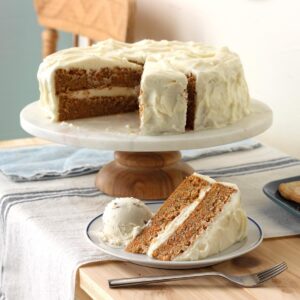
Tools matter before technique. You can know every trick in the book and still produce rough, unpolished results if your equipment fights you at every step.
A ball-bearing turntable is the single most impactful tool for any carrot cake project. It allows consistent cream cheese frosting application without the lateral hand movement that produces drag marks and uneven sides. Beyond that, offset spatulas in both large and small sizes, a quality bench scraper, piping bags with multiple tips, and a thermometer cover ninety percent of what any carrot cake project ever needs.
1: Turntable Choice and Weight Capacity
Most home turntables max out at around eight pounds, which suits single-layer carrot cake projects fine. Three-layer cakes loaded with cream cheese frosting and toppings can exceed twelve pounds — at that weight, a proper aluminum ball-bearing model is a necessity, not a luxury.
2: Offset Spatulas and Bench Scrapers
A large offset spatula applies the bulk frosting, while the small one handles fine detail work around the top edge and between decorative elements. The bench scraper, held steady against the side while the turntable spins, produces the smooth finish that defines polished carrot cake work.
3: Piping Tips for Carrot Cake Work
Tip 1M for rosettes, tip 32 for tight star borders, and tip 352 for leaf accents cover the majority of piped work on any carrot cake. Leaf tips add greenery that complements marzipan carrot stems naturally and without looking forced.
Stabilizing Cream Cheese Frosting for Decorated Carrot Cake Work:
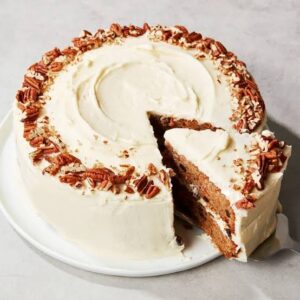
Cream cheese frosting failure is the number one reason carrot cake projects collapse — literally. Understanding why it fails, and how to prevent it, changes everything.
Cream cheese frosting is an emulsified mixture that breaks when overworked or exposed to heat. The fat content in full-fat cream cheese stabilizes better than reduced-fat varieties, which contain more water and collapse faster under decoration weight. Stabilizing the frosting with cornstarch, additional powdered sugar, or a small amount of instant pudding mix changes its structural behavior meaningfully, giving piped elements more hold time before softening begins.
1: Cornstarch Stabilization Method
Add two teaspoons of cornstarch per standard batch during the powdered sugar mixing stage. This binds excess moisture from the cream cheese without affecting flavor, giving the frosting fifteen to twenty additional minutes of workability before it begins to soften.
2: Powdered Sugar Ratios That Hold Structure
Most recipes call for three to four cups of powdered sugar per eight ounces of cream cheese. Pushing to four and a half cups increases stiffness measurably without turning the frosting gritty — the key is sifting the sugar first to prevent lumps that piping tips will catch and split.
3: Temperature Control During the Decorating Process
Work in a kitchen below 70°F whenever possible. Keep the piping bag in the refrigerator between uses, swapping between two bags to maintain cold frosting throughout the session. A decorated carrot cake with cream cheese elements should return to the refrigerator within ninety minutes of starting decoration — warm kitchens collapse frosting faster than most bakers realize until it’s too late.
Crumb Coat Technique for a Flawless Decorated Carrot Cake:
The crumb coat is non-negotiable. No professional baker skips it on a decorated carrot cake, and the reason is simple: carrot cake crumbs are dense, brown, and highly visible through any thin frosting layer.
- Apply crumb coat no thicker than one-eighth of an inch across all surfaces
- Use a slightly stiffer frosting for the crumb coat than for the final layer
- Refrigerate for a minimum of twenty minutes, ideally thirty, before proceeding
- Check for visible crumbs before applying the final coat — fill gaps before continuing
- The crumb coat should feel completely firm before final frosting begins
Rushing this step is the most expensive shortcut in cake decorating, in time, ingredients, and visible results.
Marzipan Carrot Decorations That Define a Decorated Carrot Cake:
No single decoration identifies a carrot cake more immediately than marzipan carrots. Done well, they look convincingly real. Done poorly, they look like craft projects made by children. The difference is entirely in technique.
Color, proportion, texture, and stem construction each contribute to whether the finished carrot reads as artisan or amateur. Getting all four right on the first attempt is unlikely — making a dozen practice carrots on a quiet afternoon before the actual cake day is the professional approach, not an admission of weakness.
1: Coloring Marzipan Correctly
Use gel food coloring exclusively — liquid coloring adds water content that softens marzipan and prevents it from holding fine detail. Add color in small increments, kneading thoroughly between additions. The target orange for a realistic marzipan carrot accent is slightly deeper than pure orange, with a small addition of red gel to mimic the warm reddish undertone of a real carrot.
2: Shaping and Texturing Carrot Bodies
Roll colored marzipan into a tapered cone approximately one inch long for a cake-appropriate scale. Larger carrots look cartoonish and visually heavy unless the design is specifically themed for children. Score horizontal lines across the body with a toothpick at irregular intervals — real carrots don’t have perfectly spaced rings, and the irregularity reads as authenticity.
3: Constructing Realistic Stems
Mix green gel color into a small portion of gum paste rather than marzipan — gum paste dries firmer and holds the thin stem shape better over time. Twist two thin ropes of green gum paste together, then bend slightly at the attachment point where the stem meets the carrot body. This double-twist gives the stem a natural, organic quality that single-strand stems entirely lack.
Surface Finishes for a Striking Decorated Carrot Cake:
Any carrot cake design can carry several distinct surface finishes, each producing a completely different aesthetic from the same underlying structure.
- Smooth cream cheese finish: formal, clean, photographs beautifully in direct lighting
- Rustic palette-knife swipe: warm, artisan, suits spring tables and casual celebrations
- Naked style with exposed layers: modern, photogenic, requires perfectly level layers
- Pressed nut border on sides: textural, practical, hides minor frosting inconsistencies
- Coconut-coated sides: tropical variation, adds sweetness and visual depth
| Finish Style | Skill Level | Prep Time | Best Occasion | Visual Mood |
| Smooth cream cheese | Intermediate | 45-60 min | Weddings, formal events | Elegant, polished |
| Rustic palette-knife | Beginner | 20-30 min | Brunches, casual parties | Warm, handmade |
| Naked / semi-naked | Intermediate | 30-40 min | Spring events, Easter | Modern, organic |
| Pressed walnut border | Beginner | 25-35 min | Family gatherings | Classic, homestyle |
| Toasted coconut coat | Beginner | 20-30 min | Summer parties, tropical themes | Textural, distinctive |
| Piped rosette top | Intermediate | 45-60 min | Birthdays, celebrations | Dramatic, professional |
| Mirror glaze (white choc) | Advanced | 2+ hours | Special events, showpieces | Showstopping, luxurious |
| Fresh flower crown | Beginner-Int | 15-20 min | Spring weddings, Easter | Fresh, romantic |
Piped Decoration Styles That Elevate a Decorated Carrot Cake?
Piped decorations take a decorated carrot cake from homemade to genuinely professional-looking. The right tip and consistent pressure control produce results that look practiced even when the baker is still building skill.
Rosettes piped with tip 1M in a full-coverage top arrangement is the most popular piped look for a decorated carrot cake, and for good reason — it hides any unevenness in the final frosted surface while creating a lush, celebration-worthy visual. Combine with a small shell or rope border at the base for full visual cohesion.
1: Full-Coverage Rosette Arrangements
Begin at the outer edge of the cake and work inward in concentric rings. Maintaining consistent bag pressure is more important than precise placement — an evenly pressured ring of rosettes reads as deliberate even if the spacing isn’t geometrically perfect. Fill the center last with a final rosette that covers the natural converging gap.
2: Border Piping at the Base and Top Edge
A shell border piped with a star tip at the base creates a clean visual line between the cake board and the frosted sides. Each shell should slightly overlap the tail of the previous one — gaps between shells read as amateur, while overlaps read as intentional.
3: Writing and Message Piping on Carrot Cake
The off-white surface of cream cheese frosting accepts piped messages well in both chocolate and contrasting cream cheese tints. Practice the full message on parchment at the same scale before writing on the cake — no one has ever regretted that step.
Color Palettes That Work for a Decorated Carrot Cake:
Color choice on a decorated carrot cake isn’t about trend-chasing. It’s about matching the palette to the cake’s inherent visual personality.
- Ivory, cream, and soft white work universally against cream cheese frosting
- Deep orange and forest green (marzipan carrot colors) anchor any palette naturally
- Dusty rose and sage green suit spring occasions and Easter beautifully
- Gold and copper accents add luxury without clashing with warm carrot tones
- Avoid cool blues, bright purples, and highly saturated neon tones near chocolate brown crumb
Color restraint consistently produces more sophisticated results than maximalist palette choices on any carrot cake.
Seasonal Themes for a Decorated Carrot Cake:
Carrot cake is deeply seasonal in its identity, and decorating to match the season elevates the whole presentation. A decorated carrot cake designed for spring looks different from one made for a fall harvest table — and it should.
Spring versions lean into fresh edible flowers, pastel tints in the cream cheese, and light green piped leaves around marzipan carrot clusters. Easter specifically calls for sugar-coated candy eggs tucked between rosettes, a nest of toasted coconut on top, or mini fondant chick accents at the cake’s base. Fall designs draw from the spice palette — amber and burnt orange cream cheese tints, pressed pecan halves, cinnamon stick bundles, and caramel ganache drips alongside dark chocolate.
1: Spring and Easter Decorated Carrot Cake Ideas
Position three to five marzipan carrots in a natural cluster at the center of the top surface, surrounded by piped leaves in two shades of green and a ring of small piped rosettes. Add three to five fresh violas or pansies around the cluster for color that photographs as alive rather than artificial.
2: Fall and Harvest Carrot Cake Design
Toast walnut halves until fragrant and golden, press them around the entire perimeter of the frosted sides while the cream cheese is still slightly soft, then add a caramel drip at the top edge before the cream cheese fully sets. Finish with three cinnamon sticks bundled with twine as a center accent.
3: Holiday and Christmas Versions
A decorated carrot cake for winter holidays benefits from a white cream cheese surface, a cluster of sugared cranberries and rosemary sprigs at the center, and gold luster dust applied lightly across the top edge with a soft dry brush. The visual result is festive without being generic.
Advanced Techniques for an Outstanding Decorated Carrot Cake:
Once the fundamentals are solid, a handful of advanced methods push any decorated carrot cake into truly memorable territory.
White chocolate mirror glaze poured over a frozen cream cheese-frosted decorated carrot cake creates a lacquer-smooth surface that reflects light and photographs spectacularly, especially when poured in two tones — natural cream and a light orange tint — to reference the carrot theme. The freezing step is mandatory: mirror glaze poured over an unfrozen cake melts the frosting beneath it before setting, producing a wrinkled, caving surface instead of a reflective one.
1: Mirror Glaze Execution
Freeze the frosted cake for a minimum of four hours before pouring the glaze. Prepare glaze and allow to cool to exactly 90°F — measure with a thermometer, not by feel. Pour in one continuous motion from the center outward, tilting the cake slightly to encourage even coverage over the sides.
2: Edible Gold Leaf Application
Apply gold leaf over chilled, smooth cream cheese using a dry fine-bristle brush. The slightly tacky frosting surface grips the leaf on contact. Work in small patches, overlapping edges slightly for a continuous metallic sheen. Gold leaf on a decorated carrot cake photographs best in warm, directional light rather than flat overhead lighting.
Storage, Transport, and Serving a Decorated Carrot Cake:
A decorated carrot cake survives transport when it’s properly prepared and properly contained. The cream cheese element makes refrigeration mandatory, which adds planning complexity compared to a buttercream-frosted cake that tolerates room temperature better.
- Refrigerate the finished cake uncovered for thirty minutes before boxing
- Use a rigid box with vertical clearance for any upright decorative elements
- Place on a non-slip mat inside the box to prevent sliding during driving
- Transport in an air-conditioned vehicle — never in a trunk or a warm car
- Remove from refrigeration thirty to forty minutes before serving for best flavor
Cream cheese flavor blooms at room temperature, so any cream cheese cake served cold straight from the refrigerator will taste flatter than one brought to room temperature before cutting.
Summary
Mastering a decorated carrot cake means combining stabilized cream cheese frosting technique with purposeful decorating choices that suit the cake’s warm, rustic character. This guide covers crumb coating, marzipan carrot construction, piped rosette work, seasonal themes, surface finishes, and advanced methods like mirror glaze. Every decorated carrot cake benefits from temperature control, a proper crumb coat, and well-executed signature accents that reflect the occasion.
FAQ’s
Q1: How do I stop cream cheese frosting from sliding off a decorated carrot cake?
Stabilize with cornstarch, always work cold, and refrigerate immediately between decorating steps.
Q2: How far in advance can I make a decorated carrot cake?
Decorate up to two days ahead and refrigerate, adding fresh elements on the day of serving.
Q3: Do marzipan carrots hold up overnight on this style of cake?
Yes, store uncovered in a cool, dry environment or loosely covered in the refrigerator.
Q4: What surface finish suits a beginner’s first decorated carrot cake best?
A rustic palette-knife swipe requires the least precision and still looks professional and intentional.
Q5: Is it possible to freeze a fully decorated carrot cake?
Freeze without fresh flowers or gold leaf — add those elements after thawing for best results.
Conclusion
A decorated carrot cake rewards patience, temperature discipline, and technique over raw creativity. Stabilize the frosting, nail the crumb coat, choose decorations that match the cake’s own character, and maintain refrigeration throughout the process. Every polished result you see came from exactly these decisions, made correctly and consistently.