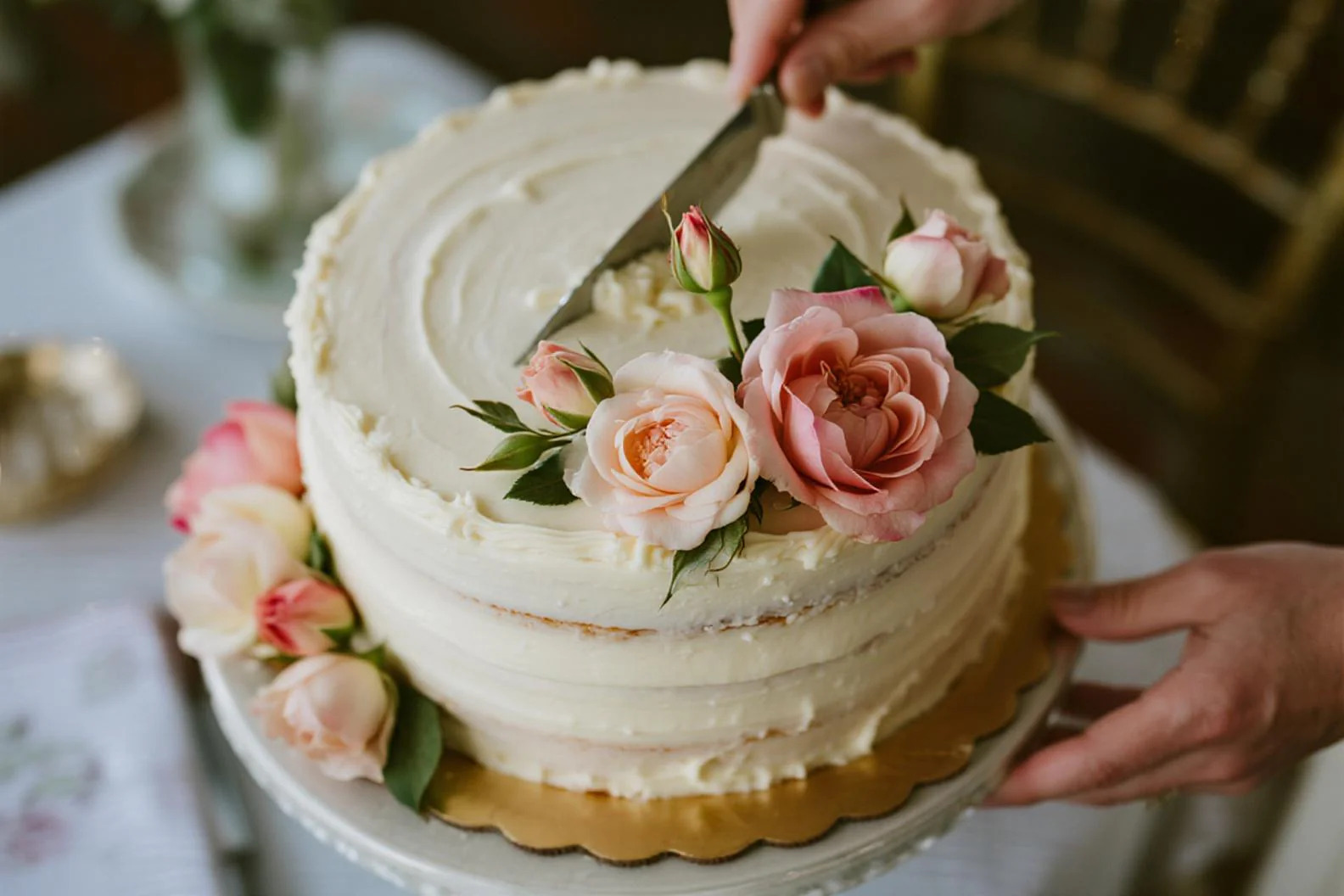
I love using cake decorating flowers because they instantly make cakes look more professional and artistic. Creating delicate petals and colorful blooms is one of the most enjoyable parts of decorating. The finished floral designs always impress guests and make celebrations feel extra special.
Cake decorating flowers are a beautiful way to add elegance and charm to any cake. They can turn a simple dessert into a stunning masterpiece.
Discover creative cake decorating flowers that add beauty, elegance, color, and charm, making every cake unforgettable and eye-catching.
Why Cake Decorating Flowers Are the Single Highest-Impact Skill in Pastry Arts:
Nothing on a cake commands attention the way a flower does. Not a drip. Not a geometric pattern. Not even gold leaf. Cake decorating flowers carry emotional weight — they signal celebration, romance, and care in a way that abstract design never quite achieves.
The reason professional bakers obsess over them is simple: flowers are the one decorative element where mastery is immediately visible. A beginner’s rose looks like a beginner’s rose. There’s nowhere to hide. That’s what makes them worth mastering — the payoff is proportional to the effort.
Most home bakers make one foundational mistake. They try to pipe flowers directly onto the cake surface, which makes correction impossible and pressure awkward. Pros pipe onto parchment squares or flower nails and freeze them first. That single shift in process unlocks everything else.
Cake decorating flowers also scale in difficulty in a way most skills don’t. You can learn a passable five-petal blossom in an afternoon. A ranunculus with 40 curved petals will take weeks. The ladder is long, which means there’s always a next level to chase.
The 5 Essential Tools Every Baker Needs Before Attempting Cake Decorating Flowers:
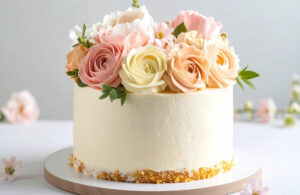
Jumping straight to piping without the right toolkit is the fastest way to frustration. Cake decorating flowers demand specific equipment — not because decoration is fussy, but because precision requires the right instruments.
- Flower nail (#7 or #9): The rotating surface is non-negotiable for roses, peonies, and ruffled blooms — it lets you spin while piping rather than awkwardly rotating your arm.
- Piping tips 1M, 2D, 104, 101, and 81: These five tips collectively produce the widest range of cake decorating flowers across skill levels.
- Gel food coloring (not liquid): Liquid coloring thins buttercream and destroys the consistency needed for petal structure.
- Parchment squares (3″x3″): Cut these ahead of time and keep a stack ready — they’re how you transfer finished flowers to the freezer without damage.
- Offset spatula (small, 4.5″): For smoothing buttercream bases on the nail before piping the first petal layer.
Cheap piping bags collapse under pressure and crack at the seam mid-pipe. Invest in reusable silicone bags or quality disposables — it genuinely changes your output.
Buttercream Consistency: The Variable That Determines Whether Cake Decorating Flowers Hold or Collapse:
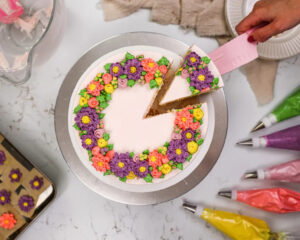
Ask any pastry professional what causes most flower failures and the answer is unanimous: wrong buttercream consistency. Cake decorating flowers live or die based on how stiff the fat-to-sugar ratio is, and that ratio changes based on the specific flower you’re making.
Understanding consistency isn’t guesswork. It’s calibrated.
1: Stiff Consistency for Upright Petals
Stiff buttercream holds a sharp peak when the spatula is pulled away. For cake decorating flowers like roses, peonies, and carnations — where petals need to stand vertically and hold their curl — this is the correct consistency. A good benchmark: the buttercream should not droop at all when held upside down on the spatula for ten seconds.
To achieve stiff consistency, use a ratio of approximately 1 cup fat to 4 cups powdered sugar, adding heavy cream by the half-teaspoon only if the mixture is cracking rather than tearing.
2: Medium Consistency for Flat Petals
Medium buttercream is what most bakers use for daisy-style cake decorating flowers, sunflowers, and simple five-petal blossoms. It spreads slightly on contact, which creates the soft, natural edge that makes flat petals look organic rather than mechanical. The test for medium: your spatula leaves a peak that slowly curls over in about five seconds. Not immediately, not never.
3: Soft Consistency for Leaves and Grass
Leaves require movement. If your leaf piping tip produces leaves that look like triangles, your buttercream is too stiff. Soft consistency allows the tip to drag a realistic ridged leaf that tapers naturally to a point.Never use the same batch of buttercream for both your roses and your leaves without adjusting the consistency between tasks.
The 5 Most Requested Cake Decorating Flowers in the US Wedding Market:
Wedding orders define the commercial demand for cake decorating flowers. Understanding which flowers are most requested tells you exactly where to invest your practice hours.
- Garden roses: The undisputed king of cake decorating flowers for weddings — voluminous, romantic, and technically demanding enough to command premium pricing.
- Peonies: Clients consistently confuse peonies with garden roses, but the layered, ruffled center distinguishes them and adds lushness that photographs beautifully.
- Ranunculus: Trending sharply over the past three years, particularly for spring and summer weddings — characterized by tightly wound inner petals spiraling outward in concentric circles.
- Anemones: Striking high-contrast flowers with dark centers and wide, flat petals — typically done in white buttercream with a black gel center dot.
- Sweet peas: Delicate ruffled clusters that create an impressionistic garden effect when grouped, popular for boho and cottagecore aesthetics.
Step-by-Step Method for Piping a Buttercream Garden Rose:
The garden rose is the benchmark cake decorating flower. If you can pipe a convincing garden rose, every other flower becomes more accessible by comparison. The technique uses tip 1M or 104 depending on desired petal width.
Before starting, spend a moment preparing your nails. The transition from “nail to cake” thinking is the single biggest shift beginners need to make, and it starts by treating the nail as a miniature cake surface with its own logic.
Step 1: Building the Cone Base
Press a parchment square onto a lightly greased flower nail. Pipe a tight, upright cone of stiff buttercream directly at the center — roughly 1 inch tall and tapered to a point. This cone is your foundation; every petal wraps around it. Rotate the nail as you pipe the cone so it’s symmetrical from all angles. Freeze it for five minutes before adding petals. A soft cone will collapse under petal pressure.
Step 2: Piping the Inner Petals
Hold tip 104 with the wide end touching the base of the cone, narrow end angled outward and slightly away from you. Rotate the nail counterclockwise while moving the bag in a short upward arc — this creates one curved inner petal. Repeat three times around the cone, overlapping each petal by roughly one-third. These inner petals form the tight spiral center that makes the flower read as a rose rather than a generic bloom.
Step 3: Adding Middle and Outer Petals
Each subsequent layer of petals should be slightly larger and more open. Angle the tip progressively outward with each row — inner row is nearly vertical, middle row is about 45 degrees, outer row almost horizontal. Outer petals should cup slightly downward at their edges. This downward lip is the detail that separates an amateur rose from one that looks three-dimensional and light-responsive.
Step 4: Transferring to the Cake
Slide the parchment square off the nail onto a flat tray and freeze for 15–20 minutes minimum. Frozen flowers peel cleanly from parchment without any distortion. Place them on the cake using an offset spatula or your fingertip — work fast, as body heat starts softening petals within seconds. Arrange with the largest flowers first, then fill gaps with smaller blooms and buds.
Coloring Techniques That Make Cake Decorating Flowers Look Realistic:
Color is where most home bakers stop short. Single-color cake decorating flowers look flat. Nature doesn’t produce single-color flowers — every petal has depth, gradient, and variation.nProfessional bakers use two primary coloring techniques: the two-tone bag method and the dusting method. Both produce fundamentally different results, and the choice depends on the flower type and the finish you’re after.
Two-tone bag method: Before loading buttercream into the piping bag, paint a thin stripe of darker gel color along the inside of the bag using a small brush or toothpick. When you pipe, the darker color migrates to one edge of the petal, creating a natural gradient. This works beautifully for cake decorating flowers like roses and peonies.
Dusting with petal dust: After the buttercream flower is frozen and placed on the cake, dust the petal edges with edible petal dust using a soft brush. Burgundy dust on a blush rose. Gold dust on a peach dahlia. This technique adds a dimension that piping alone can’t achieve.
Deep color saturation: When making red or deep purple cake decorating flowers, add color to the fat before incorporating the sugar. Fat-soluble pigments penetrate differently than surface-added color and produce deeper, truer hues without requiring excessive gel that can bitter the buttercream.
Cake Decorating Flowers : Techniques, Tools & Difficulty Reference Table
| Flower Type | Recommended Tip | Buttercream Consistency | Difficulty Level | Avg. Petals | Best Used For |
| Garden Rose | 104, 1M | Stiff | Intermediate | 15–20 | Wedding tiers, focal blooms |
| Peony | 104, 124K | Stiff | Advanced | 30–40 | Luxury cakes, anniversary |
| Ranunculus | 102, 103 | Stiff | Advanced | 35–50 | Spring/summer weddings |
| Daisy | 81, 2D | Medium | Beginner | 8–12 | Birthday cakes, casual events |
| Sunflower | 1M, 2D | Medium | Beginner | 12–20 | Rustic and farm-style cakes |
| Anemone | 104, 101 | Medium–Stiff | Intermediate | 5–8 | High-contrast modern designs |
| Sweet Pea | 101s, 101 | Medium | Intermediate | 4–6 | Garden-style, boho cakes |
| Carnation | 150, 152 | Stiff | Intermediate | 20–30 | Textural centerpiece blooms |
| Chrysanthemum | 81, 79 | Stiff | Advanced | 40–60 | Dramatic statement cakes |
| Daffodil | 102, 81 | Medium–Stiff | Intermediate | 6 | Spring-themed cakes |
| Hydrangea Cluster | 2D, 1M | Medium | Beginner | 4 per cluster | Textural filler blooms |
| Lavender Sprig | 1, 3 | Soft–Medium | Beginner | N/A (piped) | Rustic, herbal aesthetics |
| Bluebell | 59, 57 | Medium | Intermediate | 5 | Wildflower and garden themes |
| Open Rose Bud | 104 | Stiff | Beginner | 3–5 | Accent flowers between focal blooms |
Gum Paste vs. Buttercream: Choosing the Right Medium for Cake Decorating Flowers
This is the debate that splits bakers. Both mediums produce stunning cake decorating flowers — but they’re not interchangeable, and the choice matters significantly depending on your project constraints.
Pulled sugar stamens: Real flowers have stamens. Sugar flowers without them look unfinished to anyone with botanical awareness. Melt isomalt into thin threads and pull them to create ultra-fine stamen bundles — this detail transforms a good sugar flower into something museum-quality.
Veining with silicone molds: Food-safe silicone veiners pressed against rolled gum paste transfer the exact surface texture of a real petal — every ridge, vein, and edge variation. Cake decorating flowers made with veiners photograph with a realism that hand-sculpting rarely achieves at speed.
Dusted calyx and foliage: The part of the flower where the petals meet the stem — the calyx — is where botanical accuracy most often breaks down. A small green calyx made from tinted gum paste and dusted with forest green petal dust anchors the flower visually and makes it read as complete rather than floating. The core difference comes down to what you prioritize: edibility, longevity, or detail precision. Understanding that hierarchy makes the choice automatic.
1: When Buttercream Wins
Buttercream is the obvious choice when taste matters — and for most celebration cakes, it does. Cake decorating flowers made from buttercream are fully edible, require no lead time beyond freezing, and integrate seamlessly with the cake’s flavor profile.
Buttercream also responds to temperature variation gracefully when made with a proper emulsion. Swiss meringue buttercream, in particular, produces cake decorating flowers with a delicate translucency that gum paste can’t replicate.
2: When Gum Paste Wins
Gum paste enables detail that buttercream physically cannot achieve. The medium dries rigid, which means petals can be thinned to near-transparency using a ball tool and foam pad — a technique called veining that produces stamen-level botanical realism.
For sugar flowers on display cakes, competition cakes, or wedding cakes that will sit at room temperature for hours, gum paste is the professional standard. Cake decorating flowers in gum paste can be made weeks in advance and stored in a cool, dry environment.
3: The Hybrid Approach
Many advanced decorators use both within a single arrangement: gum paste for the focal roses and structural focal blooms, buttercream for the smaller filler flowers and foliage. This approach maximizes visual impact while keeping assembly efficient.
The 5 Most Common Mistakes That Ruin Cake Decorating Flowers:
Even experienced bakers hit recurring failure points. Recognizing these patterns — and knowing the mechanical fix for each — is what separates consistent output from hit-or-miss results.
- Piping at room temperature: Buttercream softens as you handle it, and flowers piped in a warm kitchen will spread and lose definition within minutes. Pipe in a cool environment (under 70°F) and refrigerate in stages.
- Using liquid food coloring: Liquid coloring introduces water into a fat-based medium, breaking the emulsion and producing streaky, greasy cake decorating flowers with compromised structure.
- Skipping the cone base on roses: Every layer of petals needs something to wrap around — without a cone, rose petals fall inward and the flower looks like a smashed blob rather than a spiral bloom.
- Over-pressuring the piping bag: The most common beginner error. Petal tips are sensitive — excess pressure creates thick, blobby petals. The movement of the wrist and rotation of the nail do the work; the bag just supplies a steady, moderate flow.
- Placing warm flowers directly on a crumb-coated cake: Without freezing first, the flower’s weight deforms it on contact. Always freeze for a minimum 15 minutes before transfer, and work on a chilled cake surface.
Seasonal Flower Palettes and Color Trends for Cake Decorating Flowers in 2024–2025:
Trends in cake decorating flowers shift with interior design and wedding industry aesthetics — and staying current directly affects how clients perceive your work’s sophistication.
The current market is moving decisively away from single-color monotone arrangements and toward complex, naturalistic palettes that borrow from botanical illustration.
1: Spring and Summer Palette Trends
The dominant palette for spring 2024 through summer 2025 features dusty rose, sage green, warm ivory, and terracotta. These colors appear across wedding decor, floral design, and cake decorating flowers simultaneously — clients who see the palette in their floral arrangements want to see it echo on their cake.
Specific combinations that are performing well in custom orders: blush ranunculus with dried-look terracotta anemones; ivory garden roses with sage green leaf accents; dusty mauve peonies with warm gold petal dust edging.
2: Fall and Winter Palette Trends
Fall brings jewel tones back into favor — deep burgundy, forest green, plum, and metallic copper. Cake decorating flowers in these palettes benefit enormously from petal dust finishing, as the dust adds the matte depth that makes jewel tones read correctly at a distance.
Winter cake decorating flowers are shifting toward a more spare, minimalist aesthetic: white on white with silver dust accents, single oversized blooms rather than clusters, and negative space used deliberately.
3: What Colors Are Fading
Millennial pink as a dominant tone is declining in wedding markets. All-gold metallic cake decorating flowers, popular between 2019 and 2022, are now read as dated to clients who follow design trends closely.
How Professional Bakers Arrange Cake Decorating Flowers for Maximum Visual Impact:
Piping skill alone doesn’t create a beautiful cake. Arrangement is a design discipline unto itself — and it follows specific compositional principles borrowed from floral design and fine art.
The most important concept is the focal point cluster. Professional arrangements for cake decorating flowers always begin with a single dominant cluster — typically placed at the top of the cake at a slight angle, or cascading from 11 o’clock down toward 5 o’clock for a crescent arrangement.
From that focal cluster, all other flowers radiate outward in decreasing size. The biggest, most detailed flowers sit at the center of the cluster. Mid-size cake decorating flowers fill the middle ring. The smallest accent flowers and buds occupy the outermost edges, where they transition into leaves, vines, or bare cake surface.
Odd numbers govern flower count. Three focal blooms always look better than four. Five looks better than six. This is a principle of visual design that dates back to classical composition and holds consistently across cake styles. Negative space is not empty space — it’s breathing room. Covering every visible inch of a cake with cake decorating flowers is a beginner instinct. Restraint is what makes professional cakes look editorial rather than busy. Color placement follows the triangle method: the dominant color appears in three non-adjacent spots across the arrangement, so the eye travels continuously around the composition rather than fixating on one point.
Business Pricing Strategy for Cakes Featuring Cake Decorating Flowers:
If you’re selling decorated cakes, the pricing logic around flowers is distinct from the logic around other decorative elements. Cake decorating flowers are labor-intensive in a measurable way — and that labor needs to be priced accurately or the business model doesn’t hold.
The industry standard approach is to price flowers individually by complexity tier.
Simple blossoms (hydrangea clusters, small daisies): $1–$2 per flower. These take under a minute each once proficient, and are often piped in bulk batches. Intermediate flowers (open roses, anemones, sweet peas): $3–$5 per flower. These require individual attention and moderate freeze time. Advanced focal blooms (garden roses, peonies, ranunculus): $7–$15 per flower, depending on size and detail level. A single large peony with 35 petals can take 8–12 minutes to pipe with proper layering.
Beyond per-flower pricing, professional bakers charge a design fee that covers arrangement planning, color development, and setup time — typically $25–$75 depending on arrangement complexity. Cake decorating flowers for wedding tiers also carry a delivery and installation premium.
One tactical note: always photograph your flowers before delivery and maintain a portfolio organized by flower type. Clients who can see exactly what they’re purchasing convert significantly better than those choosing from abstract descriptions.
Advanced Techniques That Take Cake Decorating Flowers to a Professional Level:
Once the core flowers are solid, the techniques that create genuine separation between hobbyists and professionals are about dimensional realism and botanical accuracy.
Wiring gum paste flowers: Thin floral wire inserted through the base of a gum paste petal before drying allows the flower to be bent, angled, and repositioned after the fact. This technique opens up true three-dimensional arrangements where cake decorating flowers float at different heights rather than sitting flat against the surface.
Monochromatic depth technique: Rather than using multiple colors in an arrangement, use five to seven shades of a single hue — from near-white to deep saturated — across all the cake decorating flowers in a composition. The result reads as sophisticated and intentional in a way that multicolor arrangements rarely do for formal cakes.
Summary
Cake decorating flowers add beauty, elegance, and creativity to any cake design. Whether made from buttercream, fondant, royal icing, or fresh edible blooms, they can transform a simple cake into a stunning centerpiece. From classic roses to delicate blossoms, cake decorating flowers are perfect for birthdays, weddings, and special celebrations, allowing decorators to create unique and visually appealing designs.
FAQ’s
Q1: What is the easiest cake decorating flower for beginners to learn first?
A: The hydrangea cluster made with tip 2D is the simplest — a single squeeze produces a complete four-petal bloom.
Q2: How far in advance can I make buttercream cake decorating flowers?
A: Buttercream flowers can be piped, frozen, and stored for up to three weeks before use.
Q3: Can I use store-bought frosting for cake decorating flowers?
A: Store-bought frosting is too soft to hold petal structure — make stiff scratch buttercream for reliable results.
Q4: What’s the difference between tip 1M and tip 2D for cake decorating flowers?
A: Tip 1M produces a tighter, more defined swirl; tip 2D makes a wider, more open ruffled bloom.
Q5: Do cake decorating flowers need to be refrigerated after being placed on the cake?
A: Yes — buttercream flowers stabilize best when the finished cake is kept refrigerated until one hour before serving.
Conclusion
Cake decorating flowers reward patience and precision in equal measure. Start with hydrangeas and open roses, master your buttercream consistency before scaling complexity, and build an arrangement practice rooted in composition principles — focal cluster first, odd numbers always, negative space intentional. Every flower you pipe makes the next one better.