A decorator in Austin with three years of self-teaching sent me photos of her piped rosettes consistently collapsing at a temperature at which the shortening-to-butter ratio she’d chosen loses structural integrity under piping pressure. I watched sixteen students attempt the same smooth-finish technique using Swiss meringue buttercream for cake decorating.
Buttercream for cake decorating is not a single ingredient — it is a category of fundamentally different formulas, each with distinct behavior, temperature sensitivity, and technical requirements.
Master buttercream for cake decorating at the formula level, and every technique you attempt becomes dramatically more controllable and consistent.
Why Buttercream Formula Choice Is the Foundation of All Cake Decorating:
Every piping decision, every smooth finish attempt, every flower form and border execution depends on the physical behavior of the buttercream you are working with at that moment. Buttercream for cake decorating is not passive background material — it is an active, temperature-responsive, fat-and-sugar matrix whose behavior shifts dramatically based on ambient temperature, mixing method, and ingredient ratios.
Professional decorators understand this at a chemical level. Buttercream is an emulsion — fat droplets suspended in a liquid-sugar system, stabilized by continuous agitation during mixing and held in structure by the crystallization behavior of the fat component at working temperature. When the temperature rises above the fat’s crystallization point, the structure softens and loses the rigidity that makes piped forms hold their shape. When temperature drops too far below it, the emulsion becomes stiff, tears on contact with the cake surface, and resists blending.
The optimal working temperature for buttercream for cake decorating depends on which formula you are using, which is why temperature management is not a universal tip — it is formula-specific. Knowing your formula’s operating parameters is not optional for consistent professional results.
The 5 Buttercream Formulas Every Decorator Should Know:
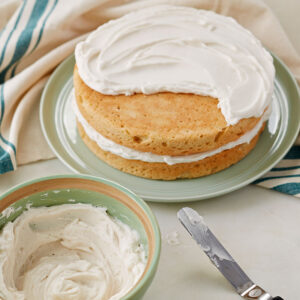
Buttercream for cake decorating is not one recipe — it is a family of recipes with genuinely different compositions, behaviors, and best-use applications. These five formulas cover the full professional range.
- American buttercream — powdered sugar beaten into softened butter; highest sweetness, stiffest structure at room temperature, easiest to make, most heat-sensitive; the default entry-level buttercream for cake decorating used in most US home kitchens.
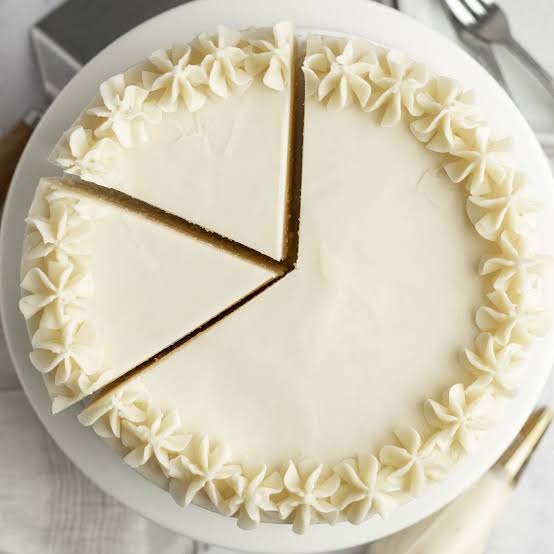
- Swiss meringue buttercream (SMBC) — egg whites and sugar heated together, whipped to meringue, then butter beaten in; silkier texture, less sweet, more stable at moderate temperatures; the professional standard buttercream for cake decorating in most specialty bakeries.
- Italian meringue buttercream (IMBC) — hot sugar syrup poured into whipped egg whites, then butter beaten in; the most stable of all meringue-based formulas; preferred buttercream for cake decorating in commercial production environments.
- French buttercream — hot sugar syrup beaten into egg yolks, then butter beaten in; richer flavor, more yellow in color, less structurally stable than SMBC or IMBC; used primarily for filling rather than exterior decoration.
- German buttercream (pastry cream base) — butter beaten into cooled pastry cream; deeply rich, very soft, not suitable as an exterior smooth-finish buttercream for cake decorating; primarily used as a filling or internal layer.
American Buttercream: When It Works and When It Doesn’t:
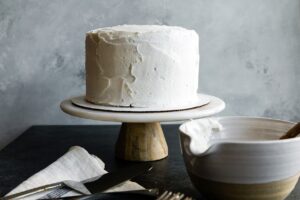
American buttercream for cake decorating is the most widely used formula in the US home baking market — and the most frequently misapplied. It has real strengths. It also has specific, predictable failure modes that most decorators never diagnose because they do not understand the formula’s operating limits.
The defining characteristic of American buttercream is its powdered sugar structure. Confectioner’s sugar contains cornstarch — typically 3% by weight — which acts as a stabilizing agent that extends the formula’s working temperature range compared to pure fat-and-sugar systems. This is why American buttercream for cake decorating holds its shape at slightly higher temperatures than Swiss or Italian meringue formulas in brief exposure scenarios.
1: The Fat Ratio Problem in American Buttercream
Pure all-butter American buttercream becomes greasy and separates above 74°F. Adding shortening — vegetable shortening with a higher melting point than butter — extends the working temperature range significantly: a 50/50 butter-to-shortening blend produces a buttercream for cake decorating that holds piped structure up to approximately 80°F without visible collapse. The trade-off is flavor and mouthfeel. Shortening adds a persistent palate coating that many clients notice negatively. Professional decorators working in warm climates or outdoor summer venues navigate this trade-off by testing their specific environment before a critical cake, not during it.
2: Achieving a Smooth Finish With American Buttercream
American buttercream for cake decorating produces the smoothest surfaces when applied cold — spread thick, then chilled until firm, then refined with a heated bench scraper. The heat from the scraper surface melts the top layer of buttercream into a semi-liquid state that fills gaps and levels imperfections as the scraper moves. This method produces a finish quality that rivals Swiss meringue for photography purposes. Most tutorials skip this chilling step, which is why so many American buttercream smooth finishes look textured and imprecise compared to professional bakery results.
Swiss Meringue Buttercream: The Professional Standard for Smooth Finishes:
Swiss meringue buttercream for cake decorating is the formula most specialty bakeries use for exterior finishes, and understanding why illuminates exactly what properties it offers that American buttercream cannot match at the same level.
- Lower sweetness — SMBC contains roughly 60% less sugar per unit volume than American buttercream, which makes it the preferred buttercream for cake decorating when clients request “not too sweet” finishes that still photograph beautifully.
- Superior surface sheen — the emulsified fat structure in SMBC reflects light differently than American buttercream, producing a subtle satin sheen on smooth surfaces that reads as professional in photographs.
- Better piping behavior at moderate temperatures — SMBC maintains piped edge definition at room temperatures up to approximately 72–74°F before beginning to soften; ideal buttercream for cake decorating in climate-controlled venues.
- Color saturation — gel food colorants produce more vivid, truer colors in SMBC than in American buttercream because the lower sugar density does not lighten the color as aggressively.
- Freeze-thaw stability — SMBC survives freezing and thawing without textural degradation, making it the standard buttercream for cake decorating when cakes must be made days in advance and frozen between frosting and delivery.
Italian Meringue Buttercream: Maximum Stability for Commercial Production:
Italian meringue buttercream for cake decorating represents the highest technical complexity of the standard professional formulas, but the payoff is a stability profile that neither American nor Swiss meringue buttercream can match at scale or in challenging temperature environments.
The stability difference comes from the cooking method. Where SMBC heats egg whites and sugar together to pasteurize, IMBC pours a separately cooked sugar syrup at 240–245°F directly into already-whipped egg whites — a cooking process that produces a denser, more stable meringue base before the butter is incorporated. This base holds structural integrity at temperatures that cause SMBC to begin softening.
1: When to Choose IMBC Over SMBC
The practical decision point between Italian and Swiss meringue buttercream for cake decorating is the operating temperature of the venue and the decorating timeline. For same-day event cakes in climate-controlled environments, SMBC performs comparably to IMBC with lower technical complexity. For outdoor summer events, cakes requiring extended display at ambient temperature, or high-volume production environments where buttercream must remain workable across a long production window, IMBC is the correct formula choice. Italian meringue buttercream for cake decorating holds a piped structure at temperatures two to four degrees Fahrenheit higher than equivalent SMBC formulas.
2: Troubleshooting IMBC Consistency Problems
IMBC curdles. This is the most common problem decorators encounter when making Italian meringue buttercream for cake decorating for the first time, and it happens when the butter is added while the meringue base is still too warm or when the butter itself is too cold. The solution in both cases: keep mixing. A curdled IMBC that looks broken and grainy at the two-butter-thirds stage almost always comes back together with continued mixing as the temperature equalizes. Stopping and starting over is the most expensive mistake a decorator makes with Italian meringue buttercream.
Coloring Buttercream for Cake Decorating: The Science Behind Consistent Results:
Color management in buttercream for cake decorating is one of the most technically nuanced areas of the discipline, yet most guides reduce it to “add gel coloring and mix.” The reality involves understanding pigment load, color shift during curing, and the white base correction that professional results require.
- Always start with white buttercream — butter’s natural yellow tint shifts every color you add; Swiss meringue and American buttercream made with slightly whipped, high-fat European butter can be one to two shades more yellow than standard; compensate with a tiny amount of violet gel before adding any target color.
- Gel colorants, never liquid — liquid food coloring adds water to an emulsion, destabilizing the fat-sugar structure; gel colorants are pigment-dense and add negligible volume, making them the only appropriate colorant for buttercream for cake decorating.
- Color deepens during rest — add color 30–50% lighter than your target shade, then let the buttercream rest 30 minutes at room temperature before evaluating; most professional decorators have learned this through the experience of delivering a cake one shade darker than the client approved.
- Red and black require double the colorant you expect — deep reds and true blacks demand heavy pigment loads that can overwhelm an emulsion; making these shades 24 hours in advance and allowing overnight color development produces truer, more stable results.
- Color matching for school colors, brand palettes, or wedding swatches — always reference a physical swatch or Pantone chip in the same light conditions in which the cake will be displayed; screen-based color reference is unreliable for buttercream for cake decorating color-matching work.
| Buttercream Type | Sweetness Level | Optimal Working Temp | Smooth Finish Quality | Piping Stability | Skill Level | Freeze-Thaw Stable |
| American Buttercream | Very High | 65–72°F | Medium (with technique) | High (with shortening blend) | Beginner | Poor |
| Swiss Meringue (SMBC) | Medium | 68–74°F | Very High | High | Intermediate | Yes |
| Italian Meringue (IMBC) | Medium | 70–76°F | Very High | Very High | Advanced | Yes |
| French Buttercream | Medium–High | 65–70°F | Medium | Low | Intermediate | Poor |
| German (Pastry Cream) | Low–Medium | 65–68°F | Low | Low | Intermediate | Poor |
| Ermine (Flour-based) | Low | 65–72°F | Medium–High | Medium | Intermediate | Fair |
Consistency Calibration: The Most Important Skill in Using Buttercream for Cake Decorating:
Consistency is the variable that most decorators never consciously control, and it is the variable that determines whether every subsequent technique succeeds or fails. A buttercream cake decorating that is too stiff tears the crumb coat. A buttercream that is too soft produces piped forms that collapse before setting.
The professional calibration method is tactile, not measured: take a small amount of buttercream on your offset spatula and pull it away from the surface. The peak it leaves should fall back on itself slowly under gravity — not snap rigid like cold butter, and not run immediately like warm ganache. This is the medium-stiff consistency appropriate for most applications of buttercream for cake decorating. Specific adjustments from this baseline are the only variable you change for specific techniques.
1: Adjusting Consistency for Smooth Finish Application
Smooth finish work requires a slightly softer buttercream for cake decorating than piping or border work. Add heavy cream one teaspoon at a time and mix thoroughly between additions. The target is a consistency that spreads readily under the spatula without resistance but does not run when the spatula is removed. Over-softened buttercream produces a smooth surface that sags slightly before setting — visible in photographs as a slightly convex curve on the side of the cake that should be straight.
2: Adjusting Consistency for Piping
Piping requires a stiffer buttercream cake decorating than smooth finish work, because the pressure of the bag compresses the buttercream slightly before extrusion — if the starting consistency is already soft, the extruded buttercream will be too soft to hold the peak or edge definition of the intended form. Add powdered sugar one tablespoon at a time for stiffening adjustments. For very stiff applications like upright petal flowers or sharp shell borders, the buttercream should hold a clean peak without any slumping when a spatula is pulled away vertically.
Temperature Management for Buttercream for Cake Decorating:
Temperature is the single variable that breaks more decoration sessions than any other — and it is the one most consistently addressed by generic advice (“keep your kitchen cool”) without specificity about what temperatures do what to which formulas.
- Below 65°F — all buttercream formulas become too stiff for smooth application; SMBC and IMBC become greasy and grainy as the butter fat over-crystallizes; warm the bowl briefly over a double boiler and re-mix.
- 65–72°F — ideal working range for American buttercream with a butter-shortening blend; acceptable range for SMBC and IMBC if the cake is pre-chilled.
- 72–76°F — marginal for American all-butter buttercream; SMBC and IMBC remain workable; piped forms begin softening faster after placement.
- Above 76°F — American all-butter buttercream loses structural integrity for piping; SMBC begins softening noticeably; IMBC remains the most stable option; a chilled cake surface extends the workable window.
- Chilling the cake between coats — the most universally applicable temperature management technique for buttercream cake decorating; a cake chilled to 38–42°F absorbs heat from the buttercream during application, slowing the temperature rise that causes softening.
Flavor Development in Buttercream for Cake Decorating:
Technical performance and flavor are not mutually exclusive, but most tutorials discuss them as though technique is the only concern. Buttercream for cake decorating is something guests actually eat, and flavor quality is a professional differentiator that wins and retains clients more reliably than visual complexity alone.
The default vanilla American buttercream flavor is recognized by clients immediately as either generic or high quality based on two variables: vanilla source and salt balance. Imitation vanilla extract produces a distinctly artificial note that experienced palates identify within one bite. Pure vanilla bean paste — not extract, not powder, but paste containing the actual seed specks — adds a depth and complexity that immediately elevates buttercream for cake decorating from supermarket-tier to patisserie-tier in client perception.
1: Salt as a Flavor Amplifier in Buttercream
Salt is the most underused ingredient in buttercream cake decorating. Most recipes include a standard half-teaspoon per pound of sugar batch. Professional pastry chefs typically use three-quarters to a full teaspoon, added in two stages — half during mixing and half at the end — because late-added salt preserves a brighter, more present salt note than pre-added salt, which homogenizes into the sugar matrix. The perceived sweetness of buttercream cake decorating drops measurably when salt is correctly balanced, which is why clients describe a well-salted buttercream as “not too sweet” even when the sugar content is identical to the generic version.
2: Brown Butter as a Flavoring Base
Browning the butter before building a buttercream cake decorating adds a nutty, caramel-adjacent flavor dimension that is immediately distinctive. The process: melt butter in a light-colored pan over medium heat, watching for the milk solids to turn golden brown and the aroma to shift from cream to hazelnut, approximately 5–7 minutes. Cool completely and re-solidify in the refrigerator before using in any meringue-based buttercream. Brown butter SMBC is one of the most client-retention-driving flavor developments in the specialty custom cake market, and it requires no ingredients beyond the existing formula.
Buttercream for Cake Decorating in Different Climate Conditions:
US climate diversity creates genuinely different challenges for decorators working in different regions, and the standard buttercream advice written by decorators in moderate-climate cities does not apply cleanly to decorators working in Florida, Arizona, Houston, or coastal Georgia.
High humidity is the enemy of all powdered-sugar-based buttercream, and particularly of American buttercream cake decorating. Humidity above 60% causes powdered sugar to absorb atmospheric moisture, softening the buttercream structure progressively over a display period. In humid climates, SMBC or IMBC consistently outperform American buttercream for exterior decoration because their egg-white base structure is less hygroscopic than a pure powdered-sugar matrix.
Extreme heat without humidity — Phoenix, Las Vegas, inland California summer — creates a different problem: rapid fat softening without the compensating moisture absorption that slightly slows deterioration in humid heat. Italian meringue buttercream cake decorating is the most reliable formula choice for extreme-heat venues, supplemented by a chilled cake surface maintained as cold as practical before the decoration window opens.
Storage and Make-Ahead Protocol for Buttercream for Cake Decorating:
Professional decorators do not make buttercream the morning of every cake. Efficient production at any scale requires understanding the full storage and make-ahead capabilities of each buttercream formula.
American buttercream stores at room temperature in an airtight container for up to two days and refrigerates for up to two weeks — the high sugar content inhibits microbial growth at refrigerator temperatures. Before using refrigerated American buttercream cake decorating, bring it fully to room temperature and re-mix until smooth. Cold American buttercream re-mixed without fully warming first produces a lumpy, uneven texture that is difficult to smooth.
SMBC and IMBC freeze for up to three months with no quality loss when stored in airtight containers. Thaw overnight at room temperature, then re-whip in a stand mixer until the formula returns to its original light, smooth texture. This freeze-and-re-whip cycle is entirely reversible — one of the most professionally useful properties of meringue-based buttercream cake decorating, and one that makes batch production the week before a heavy booking period entirely practical.
Building a Buttercream Testing Protocol Before Any High-Stakes Decoration Session:
The decorators who never have buttercream failures on important cakes are not lucky — they have a testing protocol they execute before every significant decoration session, and it takes less than twenty minutes.
Make a small test batch of buttercream for cake decorating or bring your stored batch to working temperature. Apply it to a practice surface — a spare cake board, a piece of cardboard covered in parchment. Test the smooth-finish behavior with your bench scraper. Pipe one rosette, one shell border, one star. Evaluate each result against the consistency parameters described in this article. Adjust by adding powdered sugar or cream as needed, in the small increments described, until every test form performs correctly before you touch the actual client cake.
This protocol eliminates 90% of the buttercream cake decorating failures that decorators experience on real cakes. It is the professional standard. It is not common among hobbyists. Making it standard practice in your own workflow is the single fastest way to close the gap between your current results and professional-quality outcomes.
Summary
Buttercream for cake decorating is a formula-science discipline, not simply a recipe to follow once and repeat. American, Swiss meringue, Italian meringue, and other formulas each carry specific working temperatures, consistency behaviors, and climate limitations that determine which application each is suited for. Mastering buttercream cake decorating means calibrating consistency deliberately, managing temperature actively, and testing before every high-stakes decoration session.
FAQ’s
Q1: What is the best buttercream for cake decorating smooth finishes?
Swiss meringue buttercream produces the best smooth finish surface quality for most professional and home decorating applications.
Q2: Why does my buttercream for cake decorating keep getting too soft?
Your kitchen temperature likely exceeds the formula’s optimal working range; chill your cake surface and lower room temperature before decorating.
Q3: Can I make buttercream for cake in advance?
Yes — American buttercream stores refrigerated for two weeks; Swiss and Italian meringue buttercreams freeze for up to three months.
Q4: How do I fix curdled Swiss or Italian meringue buttercream?
Keep mixing at medium speed; curdled meringue-based buttercream almost always recovers as the temperature equalizes during continued mixing.
Q5: What type of buttercream for cake works best in hot climates?
Italian meringue buttercream provides the highest heat stability of all standard formulas, making it the best choice for warm or outdoor events.
Conclusion
Buttercream for cake decorating rewards every decorator who approaches it as a technical discipline rather than a fixed recipe. Select the formula for your environment and application, calibrate consistency before touching the cake, manage temperature actively throughout the session, and test on a practice surface first. Those four habits eliminate the failures that most decorators attribute to skill gaps but are actually formula-management problems entirely within their control.